Melody had always been a curious soul, the kind who couldn’t resist snooping through dusty attics and forgotten boxes. So when she discovered an old, leather-bound spellbook tucked beneath a pile of moth-eaten quilts in her grandmother’s attic, she couldn’t help herself. The book was ancient—its pages yellowed and brittle, filled with strange diagrams, Latin phrases, and mysterious handwritten annotations that looked like they hadn’t been touched in decades.
One rainy afternoon, alone in her room with candles flickering beside her, Melody decided to try one of the simpler-looking incantations. The spell promised “temporal insight” or so she thought—some kind of vision into the past, maybe a glimpse at her ancestors’ lives. But Melody had no formal training in magic, no understanding of the magical runes or protective circles scratched around the margins of the book. She read the spell aloud with a grin, not realizing she was tampering with ancient forces.
The moment the final word left her lips, the room seemed to stretch and twist. A high-pitched ringing filled her ears as reality shimmered like heat waves on asphalt. She stumbled backward, her vision blurring—then everything went black.
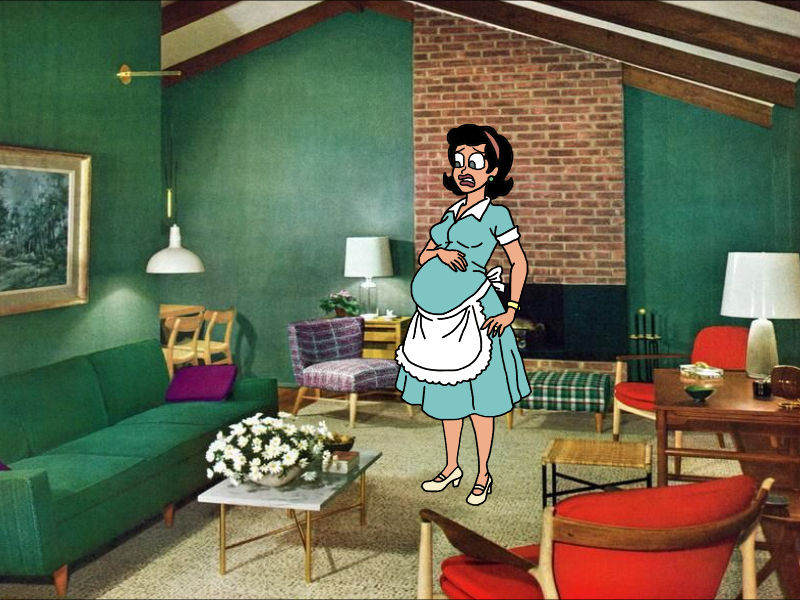
When Melody came to, everything felt... wrong. The air was warmer, humid in a way that hinted of a time before climate control was everywhere. The room smelled like vintage perfume and cigarette smoke. Her clothes felt different—heavier fabric, a floral maternity dress that hugged a very full belly. Her fingers reached down in alarm and felt the undeniable curve of pregnancy. Her hands looked older too—more mature, yet soft and well cared for. A mirror on the wall showed her a face she recognized from old photo albums: her grandmother, but decades younger. The woman in the mirror was 29 years old, glowing and heavily pregnant with twins—Melody’s own mother, Veronica, and her aunt Natalie.
Panic gripped her chest as she stared at her reflection, then looked around the room, seeing the furniture, the radio, the rotary phone, all screaming 1970s. She wasn’t just seeing the past—she was in it. She had become her own grandmother.
The transformation hadn’t just been mental—it was full, sensory, complete. She felt the weight of her body, the soft swell of her breasts, the subtle aches of late pregnancy in her back and feet. Her voice, when she gasped, was not her own but a warm, maternal tone that made her flinch in surprise. Memories from her grandmother's life flickered at the edges of her thoughts—dinner recipes, sewing tips, the name of a neighbor’s dog—all floating just beneath the surface, like ink swirling through water.
For a moment, Melody panicked. Her own body was gone—lost to time, perhaps. She was now living as her grandmother, surrounded by people who knew her not as Melody, but as Marlene—young, loving, expecting twins in a few weeks.
Melody sat down carefully, her hands cradling her rounded belly. The weight was real, the babies were real—and so was her new reality. She was stuck, at least for now.
But the question lingered in her mind, growing stronger with each passing hour: should she try to use her knowledge of the future to improve her family's life? Invest in Apple or Microsoft? Warn them of coming tragedies? Or would doing so risk unraveling the very fabric of her family’s destiny? Should she play the role fate had given her—living out her grandmother’s life exactly as it was meant to unfold, raising her own mother and aunt in the way that shaped her future self?
Now, as Melody adjusted to the strange new rhythm of life in the 1970s—going to checkups, dealing with nosy neighbors, and hiding her future knowledge—she stood at the crossroads of time itself.
Would she be the architect of a new future?
Or the guardian of the one that already was?