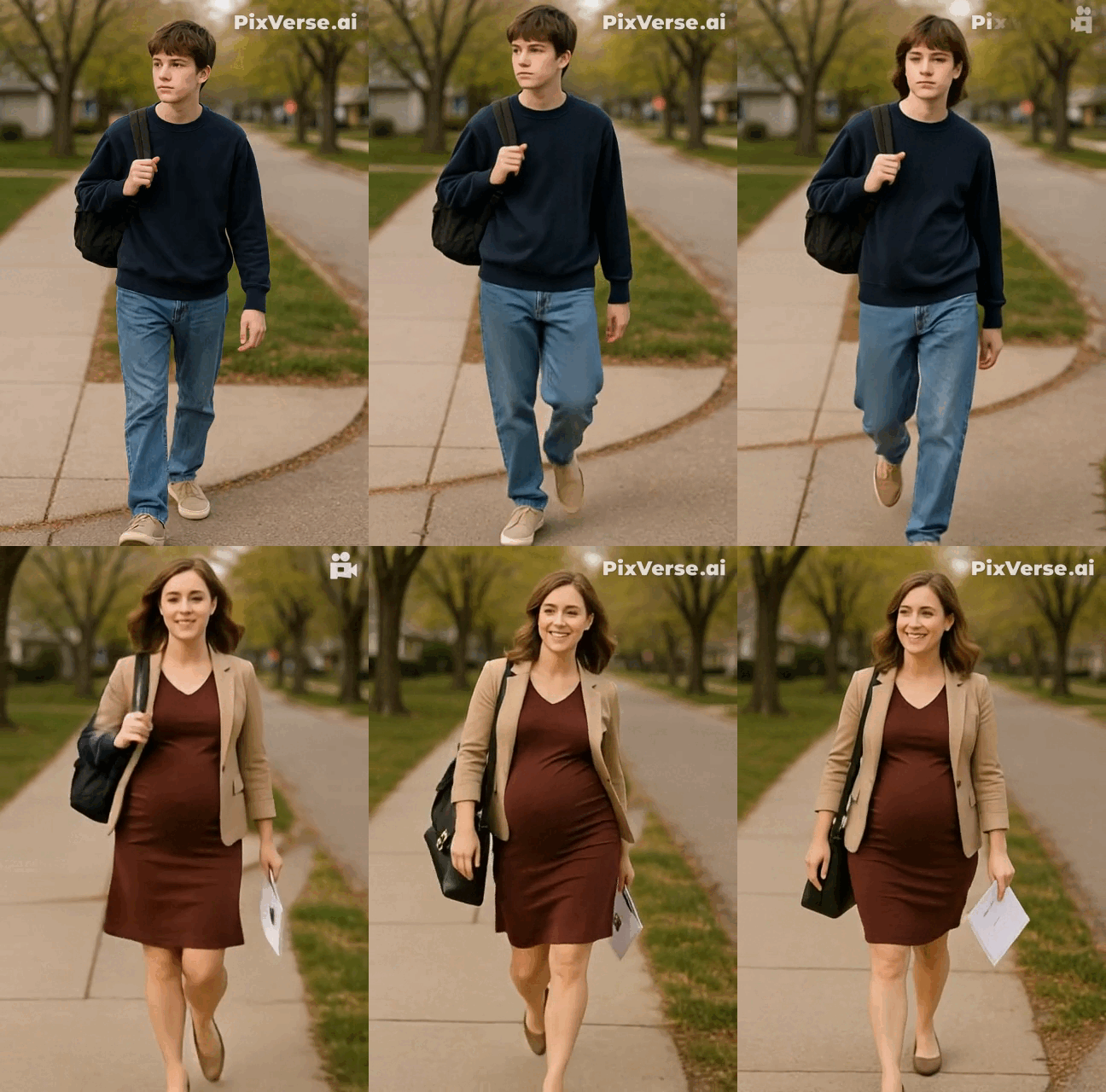
Stanley adjusted the strap of his backpack as he trudged along the sidewalk toward West Ridge High. The morning air was cool, and the streets were quiet except for the occasional chirp of birds and the faint rumble of a car in the distance. He was already running a few minutes behind, but he didn’t feel like rushing.
As he rounded the corner near the school’s side entrance, something caught his eye—a scattered pile of papers fluttering lazily in the breeze. Curious, Stanley stepped off the sidewalk and approached them. The pages were spread in a loose arc, as if someone had dropped them in a hurry.
He knelt down and picked up the top sheet.
It was a graded assignment titled “My Ideal Weekly Meal Plan”. The name at the top read Jessica Cole. Stanley frowned. He flipped through a few more pages—Madison Rivera, Alyssa Kim, Danielle Brooks. Every name was female. Every assignment was neatly handwritten, some decorated with doodles or colorful markers.
Strangely, there was no heading for the class, no teacher’s name, no classroom number—just student names and their work.
Stanley gathered the pages carefully and tapped them into a neat stack. He scanned the area for more, noticing a couple of stray papers near a bush. After grabbing those too, he tucked the bundle into his backpack.
“Who just drops this kind of stuff?” he muttered, glancing around. No one else seemed to notice, and there were no clues about where the papers had come from.
He stood there for a moment, unsettled by how out-of-place the whole thing felt. There was something off—not just that the assignments were lost, but that they had no trace of a teacher. It was like the class existed... but didn’t.
Shrugging it off for now, Stanley continued toward the school, unaware that picking up those papers had just nudged him toward something much stranger than he could’ve imagined.
Stanley continued his walk, the papers resting in his backpack like forgotten whispers. The school came into view, but a strange warmth began to rise through his body—not unpleasant, but deeply unfamiliar. He paused at the corner of the parking lot, blinking as a soft tingling sensation rippled over his skin.
He took another step, and the world around him seemed to blur ever so slightly, as if the air shimmered in a heatwave. His limbs felt lighter, his shoulders less burdened. He chalked it up to nerves or lack of breakfast and kept walking.
But as he moved, subtle changes unfolded—his stride shortened, his hips shifting in their alignment. The baggy jeans that had always hung loose around his waist now felt snug around a narrower frame. His shirt, once slouching across his chest, slowly drew tighter as his torso softened, and a gentle curve began to form where his chest had been flat.
His hands, gripping the straps of his backpack, grew slimmer, fingers more delicate. He barely noticed the subtle pitch of his inner voice changing as he muttered to himself, “Almost there…”
With each step, Stanley’s face reshaped—the square jawline softened into a graceful curve, cheekbones lifted slightly, lips fuller, eyes wider and framed by longer lashes. His hair darkened and spilled down past his shoulders in a wavy fall. Now she walked in the place of Stanley, a teenage girl around sixteen, unaware of what had occurred.
But the transformation was not done.
Another wave of warmth surged, this time deeper, more profound. She staggered slightly, her breath catching as a strange pressure built within her. Her legs lengthened slightly, her body growing taller. The curves of adolescence gave way to the mature contours of adulthood. Her midsection swelled, a rounded firmness developing beneath her blouse—steady, full, and unmistakably that of a woman six months into pregnancy.
Her clothes changed in an instant. The oversized hoodie and jeans shimmered and pulled inward, reshaping into a tailored maternity blouse with a modest neckline and a floral print. A soft cardigan draped over her shoulders, paired with a long, flowing skirt designed for comfort and professionalism. Sensible low-heeled shoes replaced worn sneakers. Her old backpack faded into a sleek leather purse, filled not with notebooks, but attendance sheets, a planner, and a well-used red pen.
She paused at the school steps and blinked.
It was as though she had always been this person.
A calm, composed woman of 35, a Home Economics teacher named Ms. Clara Wren, beloved by her students and expecting her first child by early autumn. There was no trace of Stanley left in her mind. Memories had been rearranged like books on a shelf—every detail of her life now perfectly aligned with her new identity.
As she reached into her bag, she pulled out the stack of papers she’d picked up earlier—now perfectly organized, clipped at the top with her name neatly printed in the corner:
Ms. Clara Wren
Home Economics – Period 3
Student: Jessica Cole
She smiled. “They really need to remember to staple their assignments,” she murmured, completely unaware that just minutes ago, she wasn’t a teacher—or even a woman—at all.
And with that, she stepped through the school doors, another day ahead of her… as if it had always been this way.
Clara Wren’s days had found a rhythm—gentle, purposeful, and full of warmth. Her small craftsman-style home sat on a quiet street just a short drive from West Ridge High, the front porch lined with potted lavender and a well-worn rocking chair she often found herself in after work. Inside, the house was modest but homey—bright kitchen tiles, framed class photos on the wall, and a nursery slowly taking shape down the hall with pastel colors and handmade mobiles.
She lived with her husband, Liam Wren, a tall and easygoing man with sun-kissed skin and a warm Australian drawl. He taught Physical Education at the same school and was adored by students for his energy, humor, and casual charm. Liam and Clara had a quiet kind of love—comfortable, affectionate, full of shared glances in the hallways and early-morning coffee routines.
At school, Clara was known as the gentle but firm Home Economics teacher who taught her students more than just cooking and sewing. She guided them in patience, responsibility, and how to create a space that felt like home. She ran a lunch-hour crafting club, brought in homemade snacks for staff meetings, and always remembered birthdays.
Her pregnancy was never treated as an inconvenience; the staff and students alike supported her with open arms. Liam was always nearby, sneaking in protein bars when she forgot to eat or driving her home early when her back started to ache. In faculty meetings, no one seemed to remember that Ms. Wren hadn’t always been part of the school—they only remembered her warmth, her recipes, her stories.
She spent weekends preparing for the baby—folding tiny clothes, organizing diaper drawers, making lists. Her social life was soft and fulfilling: lunch dates with other teachers, weekend potlucks, video calls with Liam’s parents back in Sydney. She felt deeply connected, never alone.
And then, one chilly morning in late October, Clara gave birth to a healthy baby girl named Ella Rose Wren. The hospital room was filled with quiet joy. Liam held the baby with awe in his eyes, and Clara wept—not from pain or fear, but from a deep sense of rightness.
There was no trace of Stanley left.
To the world, there had only ever been Clara—a teacher, a wife, a mother. And she was exactly where she was meant to be.