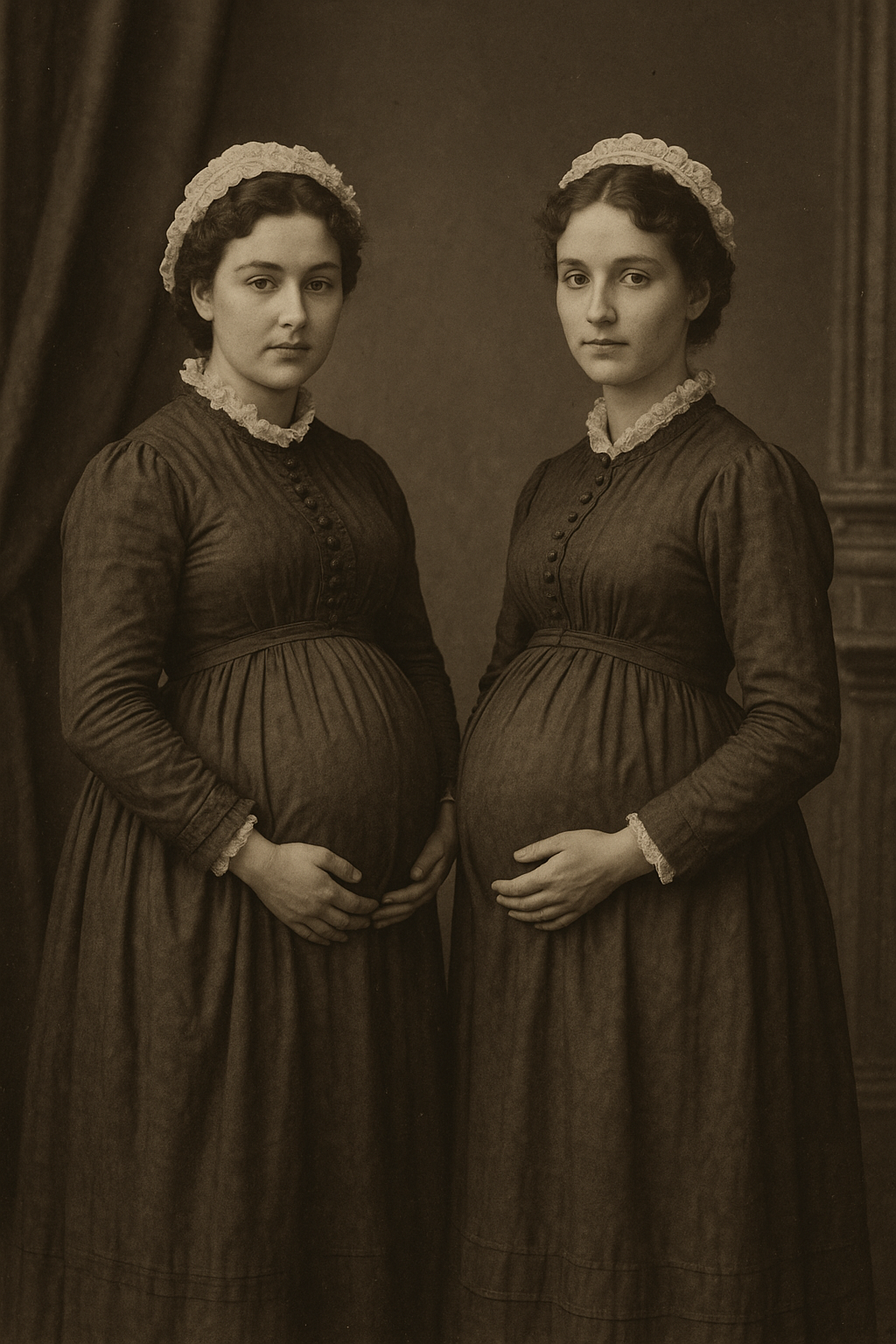
In the dim glow of fluorescent lights, Wayne and Adam sat hunched over a cluttered workbench in their university’s physics lab. It was 2:14 a.m.—again. Empty coffee cups surrounded them like a small, jittery army, and the whiteboard behind them looked like a battlefield of equations, crossed-out theories, and ambitious doodles of swirling wormholes.
“So what if we go full Back to the Future with it?” Adam asked, spinning a screwdriver between his fingers. “We mount the core into a DeLorean. Style points alone might be worth a few extra IQ points.”
Wayne chuckled, not looking up from the circuit board he was tweaking. “Right. Because clearly the flux capacitor is the missing piece here.”
Adam leaned back in his chair, rubbing his temples. “Alright then, Doctor Who. Bigger on the inside. Maybe we build a pod shaped like a phone booth?”
Wayne finally glanced over. “You do realize the TARDIS is powered by a sentient time vortex, right? We can’t even get our capacitor to hold a charge longer than 3.8 seconds.”
“Okay, okay.” Adam sat upright. “What about Primer? Those guys made time travel in a storage unit using junk and sheer spite.”
Wayne smirked. “And they broke their brains in the process.”
“Fair.”
Silence settled over the lab again as the soft hum of equipment filled the background. Somewhere near the corner of the room, their prototype—a clunky, half-glowing box of wires and promise—sat inert, like it was waiting for permission to wake up.
“We’ve named, what, twelve fictional time machines now?” Wayne muttered.
“Fourteen. Don’t forget the Time Turner and the Chrono Sphere from that weird animated movie.”
“And still nothing works.”
“Not yet,” Adam corrected.
Wayne looked at him, brows raised.
“Every one of those stories starts like this,” Adam said, gesturing at the room. “Failure. Confusion. Sleepless nights. Then boom—one accidental press of a button, one miswired capacitor, and bam…history rewrites itself.”
Wayne laughed, shaking his head. “You’re romanticizing science fiction.”
“I’m just saying... maybe we’re closer than we think.”
Neither of them knew it yet, but he wasn’t wrong.
Part 2: Mind Over Time
Six days later, the whiteboard was barely visible beneath layers of new diagrams and hastily written theories. The DeLorean jokes were fewer now, replaced by focused murmurs and the rhythmic clicking of keyboards.
Wayne stared at a blinking cursor on his screen. “What if we don’t move the body,” he said, slowly, “but the consciousness?”
Adam glanced up. “Like… upload our minds?”
“No, not upload. Transfer. Temporarily shift the consciousness into a body that already exists—either in the past or future. No paradoxes, no physical displacement. Just... mental occupation.”
Adam leaned back, eyebrows raised. “Okay, now that sounds doable. In theory.”
Wayne got up, grabbing a marker. “If we map neural activity and sync it with quantum resonances, we might be able to create a bridge—something that matches the target brain’s frequency in another time. Consciousness isn’t matter, so it wouldn’t break time’s rules the same way.”
“Like a remote login to your own—or someone else’s—brain across time?”
“Exactly. But it needs a stabilizing field. Otherwise, we could end up scrambled or stuck.”
From that moment, the idea took root. Their time machine wouldn’t be a capsule or a spinning portal—it would be a chair. Or a chamber. A neural interface with a stabilization shell, capable of reading the user's consciousness, encoding it into a quantum signal, and sending it to a specific point in time to temporarily override a compatible mind.
They called it the Temporal Consciousness Relay—TCR for short.
The next six weeks were a blur of soldering, simulations, recalibrating EEG patterns, and heated debates over moral implications. They slept in shifts, ate at odd hours, and lived inside the lab, their worlds shrinking down to just wires, code, and the tantalizing possibility of slipping into another life, another era.
By the end of week six, the machine stood tall in the center of the lab: a sleek, upright chamber with a curved headrest, a bank of sensors, and a glowing pulse that seemed almost alive.
It was ready. Or at least, as ready as they could make it.
But they hadn’t tested it. Not yet.
They both stared at it in silence.
“You thinking what I’m thinking?” Adam asked.
Wayne nodded. “We need to decide where… or rather when… to go first.”
Part 3: Misplaced Minds
The lab was quiet, save for the soft hum of the TCR. Wayne and Adam stood facing each other, each seated in their respective neural chairs, electrodes snug against their temples.
“This is it,” Wayne said.
“1890. London. Let’s make history,” Adam replied, managing a grin.
They closed their eyes, each thinking intently of their target year, letting the quantum resonance pull their consciousnesses into the temporal current the machine generated.
The shift was instant.
And jarring.
Wayne’s eyes flew open—not to the sterile hum of the lab, but to soft candlelight filtering through a lace-curtained window. He was lying in a plush bed, the room around him filled with ornate furniture and a faint scent of lavender. His limbs felt... off. Lighter. Softer. Narrower.
He sat up, glancing down—and froze.
So did Adam, half a city away, in the drawing room of a well-appointed townhouse, staring into an ornate mirror that reflected a face he didn’t recognize.
They had succeeded. Their minds were in 1890.
But they had not expected this.
Wayne looked at his reflection in a small vanity mirror. Dark curls framed a delicate face. He wore a high-collared nightgown. His—her—hands were slender and smooth.
Adam, now in a corseted dress, clutched at her chest. “What the hell—?”
But the words that came out weren’t the ones she’d intended. They came out in a crisp, upper-class British accent, with the vocabulary of the era.
“Oh dear heavens,” she said aloud, and immediately clamped a hand over her mouth. “That… that was not what I meant to say…”
Wayne stood up slowly, adjusting to the unfamiliar center of balance. “This must be… a side effect. The machine didn't just transfer us into random bodies—it’s adapting our consciousnesses to match the neural patterns of the host.”
Adam stumbled to a desk, grabbing a journal and quill, trying to scribble something—anything—in modern shorthand. But her hand instinctively wrote in 19th-century cursive.
“I can’t even write the date right!” she gasped.
Wayne, now pacing, attempted to say his name. “I am… I am Way—” But his mouth formed different words entirely: “I am Catherine Elmsworth.” He blinked. “I know her name. Her memories… they’re faint, but they’re there.”
“Same here,” said Adam—or rather, Margaret Hale. “I know how to pour tea and ride sidesaddle. I’ve never done those things in my life.”
“This is… this is incredible,” Wayne said, eyes wide. “The TCR didn’t just send us here—it merged us with them. We’re in control, but tethered to their identities. Language, posture, even instinct.”
Adam rubbed her temples. “So we’re stuck using their vocabulary?”
“Seems so.”
They stood in silence for a moment, each struggling to process the overwhelming blend of identity, time, and place.
“Catherine,” Margaret said cautiously, stifling a laugh, “I believe we may need to revise the user manual.”
Part 4: The Elegant Trap
The days that followed were surreal.
Catherine and Margaret—Wayne and Adam—moved through the cobbled streets of 1890 London with wide eyes and careful steps. Horses clopped past them. Newspaper boys shouted headlines about politics and empire. The air was thick with coal smoke and chatter in clipped British tones.
They marveled at the lack of electricity in most homes, the ornate fashion, the strict social etiquette. Every interaction was a puzzle, every conversation a balancing act between their modern instincts and their hosts’ refined behaviors.
Despite the initial shock, they adapted—slowly but impressively. Margaret became adept at managing the household staff she apparently employed. Catherine discovered that “she” had a suitor, a mild-mannered barrister named Thomas. They politely dodged deeper interactions, unsure what memories might be buried deeper in their borrowed minds.
Privately, they met in gardens or exchanged letters via trusted servants—coded notes hidden in flowery language. They documented every observation: patterns of behavior, differences in dialect, inconsistencies in perception.
Yet, through it all, one truth began to weigh heavier with each passing day.
They had no idea how to get back.
“It was supposed to be a closed loop,” Margaret said under her breath during a walk through Hyde Park, clutching a parasol against the sunlight.
“We assumed we’d just… will ourselves back,” Catherine replied, eyes scanning the sky like some answer might appear above the gas lamps.
“We spent six weeks designing the most intricate neural transfer device in history,” Margaret whispered. “And we didn’t give five minutes’ thought to a return mechanism.”
Catherine sighed, folding her gloved hands. “Because we assumed it was reversible. We thought consciousness was a thread—something we could simply pull back through the machine.”
“But the machine is in 2025,” Margaret said.
“And we’re not.”
Silence.
They both stopped walking, the gravity of the situation settling between them like a thick fog.
“No override protocol. No retrieval beacon. No physical anchors in the lab,” Catherine murmured. “We severed the connection entirely.”
Margaret clenched her jaw. “We made history… and got stuck inside it.”
They stood for a long moment, two minds from the future trapped in borrowed bodies of the past, the taste of success suddenly soured by oversight.
“But we’re not done yet,” Catherine said quietly. “We built one miracle. We can build another.”
Margaret looked over. “In 1890?”
Catherine nodded slowly. “One step at a time.”
Part 5: No Way Back
Weeks passed. The season changed. And with it, so did their sense of hope.
Catherine and Margaret met less often now—not because they didn’t want to, but because the lives they now inhabited had slowly begun to consume them. Invitations to tea, family obligations, social calls, the subtle yet inescapable expectations of womanhood in the Victorian era pressed in on them like an ornate, suffocating cage.
Each day began to feel less like an experiment and more like a sentence.
Margaret sat at a vanity table, combing her hair with practiced, unfamiliar grace. Her reflection stared back—poised, refined, and utterly alien.
She spoke aloud, quietly. “I miss my own hands.”
Catherine sat across the room in a stiff-backed chair, her hands folded tightly in her lap. “I miss the sound of traffic. Of electric hums. Of keyboards.”
Margaret laughed, but it was hollow. “I miss pants.”
The silence that followed was heavy.
They had both searched for options—frantically at first, then methodically. Libraries, scientific circles, even whispered inquiries to eccentric inventors of the time. But the truth was unrelenting: the knowledge and tools to replicate their TCR simply didn’t exist yet. Not in this century.
“We built a bridge with no return path,” Catherine finally said. “We’re stranded. In bodies that aren't ours. In lives we never asked for.”
“And expectations we never agreed to,” Margaret added bitterly. “They all assume we’ll marry. That we’ll bear children. Host dinner parties. Keep quiet, keep graceful, keep useful.”
Catherine exhaled through her nose. “We are scientists. Pioneers. We traveled time. And now the best they want from us is to arrange flowers and mind the roast.”
“They want us to become women of this time.”
Neither of them said anything after that.
But deep down, they both knew—there was no other option. They had no machine, no method, and no means to escape. They had made history, yes—but in doing so, they had exiled themselves from it.
Epilogue: Fading Echoes
Two years had passed since the experiment. Two years since Wayne and Adam had opened their eyes in unfamiliar bodies, in an unfamiliar time, and realized they had left everything they knew behind.
Now, those memories—of blinking screens, synthetic voices, and the sterile hum of a lab—felt like dreams they could no longer fully recall.
Catherine Elmsworth sat in the parlor of her country estate, sunlight casting warm lines across her swollen belly. Her son, Thomas Jr., toddled across the floor with wooden blocks, his giggle soft and unguarded. She watched him with quiet affection, a faint smile on her lips.
She could no longer remember the chemical structure of the TCR’s neural sync core. She could no longer recall the equation she once scrawled in haste on a whiteboard in 2025. The formulas had vanished, replaced by lullabies and recipes, by the way her husband's hand gently steadied her when she stood, or how he looked at her like she was his entire world.
Thomas Elmsworth—her husband—was kind, quiet, and attentive. A barrister with thoughtful eyes and a voice that never raised, he adored Catherine beyond measure. He called her “his clever rose,” and never once questioned the moments when her behavior in the early days had seemed… odd. He simply loved her, and she—eventually—loved him back.
Across the city, Margaret Hale—once Adam—stood in her nursery, gently brushing the hair of her daughter, Elizabeth, who clung to her leg with sleepy eyes. Margaret, too, was pregnant again, her posture careful, movements slow and deliberate.
Her husband, Charles Hale, was a doctor—stern in public but deeply tender in private. He had been the first to notice when Margaret began carrying herself with sudden insight and confidence, far more than society expected of a young wife. But he admired it. He encouraged her to read, to write, to think. And she did. Yet somewhere along the way, the questions stopped.
The old thoughts—the ones that spoke in the voice of Adam—had grown quiet.
At first, it had felt like sharing a mind. Then like listening to a voice from another room. And now, it was barely a whisper—just the faintest tug at the edge of sleep, like a forgotten face in a dream.
The minds of Wayne and Adam, brilliant as they once were, had dissolved like chalk in rain—absorbed, overwritten, and finally embraced by the souls of Catherine and Margaret.
Not erased.
But no longer separate.
Just… gone.
They had made history. And in doing so, they had become part of it.