At 26, Debbie Caldwell had finally done it—four grueling years of night classes, two soul-crushing internships, and a mountain of student loans had led her here: the keys to her very own home.
It wasn’t a mansion by any means—just a modest, two-bedroom house with faded blue shutters and a tiny backyard—but to Debbie, it was a castle. Her castle. A place to paint the walls whatever color she wanted, to leave her bike in the yard if she felt like it, and finally get a dog, maybe even two. She had dreams of wind chimes, garden gnomes, solar-powered flamingos—whatever screamed “Debbie lives here.”
That dream lasted exactly forty-eight hours.
On the morning of Day Three, Debbie woke up to a neatly folded notice stuck in her mailbox. In precise cursive handwriting, it read:
“Dear Ms. Caldwell,
Welcome to Rosepetal Estates. Please be reminded that our HOA guidelines prohibit visible lawn ornaments, unapproved exterior paint colors, and personal decorations visible from the street. Kindly attend the next HOA council meeting, scheduled for this Saturday at 4 PM in the community clubhouse.
Warm regards,
Brenda (HOA Chairwoman)”
Debbie stared at the letter for a long moment, eyes twitching at the word "Rosepetal." It sounded less like a neighborhood and more like a scented toilet paper brand. She glanced at her mailbox, now adorned with the tiny ceramic cat her niece had gifted her—and sighed.
She hadn’t even unpacked her boxes yet, and already, someone named Brenda had decided she was a problem.
Saturday came, and Debbie, fueled by iced coffee and quiet rage, found herself in a room full of pastel cardigans and passive-aggressive smiles. The HOA council consisted of six women, each one armed with a clipboard and an air of smug authority. Their names were almost interchangeable: Brenda, Linda, Karen (yes, really), Susan, Denise, and another Karen who went by “K.J.” but still fit the stereotype perfectly.
They welcomed her like a deer entering a wolf pack’s den. Smiles were tight, eyes calculating.
“We just want to maintain the aesthetic integrity of our community,” Brenda said sweetly, pushing a handbook across the table—at least fifty pages thick.
Debbie flipped it open and skimmed through the rules. No seasonal wreaths. Grass must be under two inches. No more than two exterior lights. No vehicles in the driveway overnight. No loud wind chimes. No flamingos. And certainly no gnomes.
Debbie’s face remained neutral, but inside, a storm was brewing.
She had a house. She had freedom. She just hadn’t realized freedom came with an asterisk.
Nothing had happened yet—but Debbie knew one thing for sure: she wasn’t about to roll over and let the Karens of Rosepetal Estates dictate the rest of her life.
Not without a fight.
Chapter 2: A Seat at the Table
Debbie wasn’t one to back down. Her entire adult life had been a lesson in perseverance: balancing coursework with late-night shifts at a coffee shop, standing her ground in male-dominated classrooms, and pushing through endless rejections to land her first real job. So when the HOA council began handing out demands like they were laws, Debbie decided she wasn’t going to be just another resident who grumbled from behind her blinds.
She was going to fight back—from the inside.
“I’m running for the open seat on the council,” she told Brenda at the next community potluck. She smiled sweetly as she said it, holding a tray of store-bought deviled eggs like an offering.
Brenda blinked, clearly startled. “Oh. Well… we haven’t had anyone run in years. Normally we… nominate among ourselves.”
“I know,” Debbie said. “That’s kind of the problem, isn’t it?”
A few of the other Karens—Linda, Denise, and the quieter of the two Karens—shared tight glances. Brenda’s smile thinned. “Of course, we encourage engagement from the community. We’ll review your application.”
But she was already in. The bylaws, buried on page thirty-eight of the HOA handbook, made it clear: any homeowner in good standing could join if a seat was open. Debbie had already triple-checked it. She submitted her application, went through the odd little interview process (mostly questions about shrub height preferences and emergency flag protocols), and two weeks later, she received a formal notice of her acceptance.
She had done it. She was on the council.
And that’s when things started to get... weird.
It wasn’t immediate. At first, it was just little things. The neighbors who used to wave at her now avoided eye contact. One man she’d chatted with before—an older guy named Mr. Carson—pulled her aside one morning while she was checking her mail.
“You shouldn’t have done it,” he said quietly, glancing nervously toward the corner of the street where Brenda’s hydrangeas bloomed like sentinels. “Everyone who joins changes.”
“Changes how?” Debbie asked, half-laughing.
“You’ll see,” he muttered. “If you still can.”
She brushed it off, of course. Probably just HOA paranoia or sour grapes. Still, she couldn’t shake the chill that had crawled up her spine.
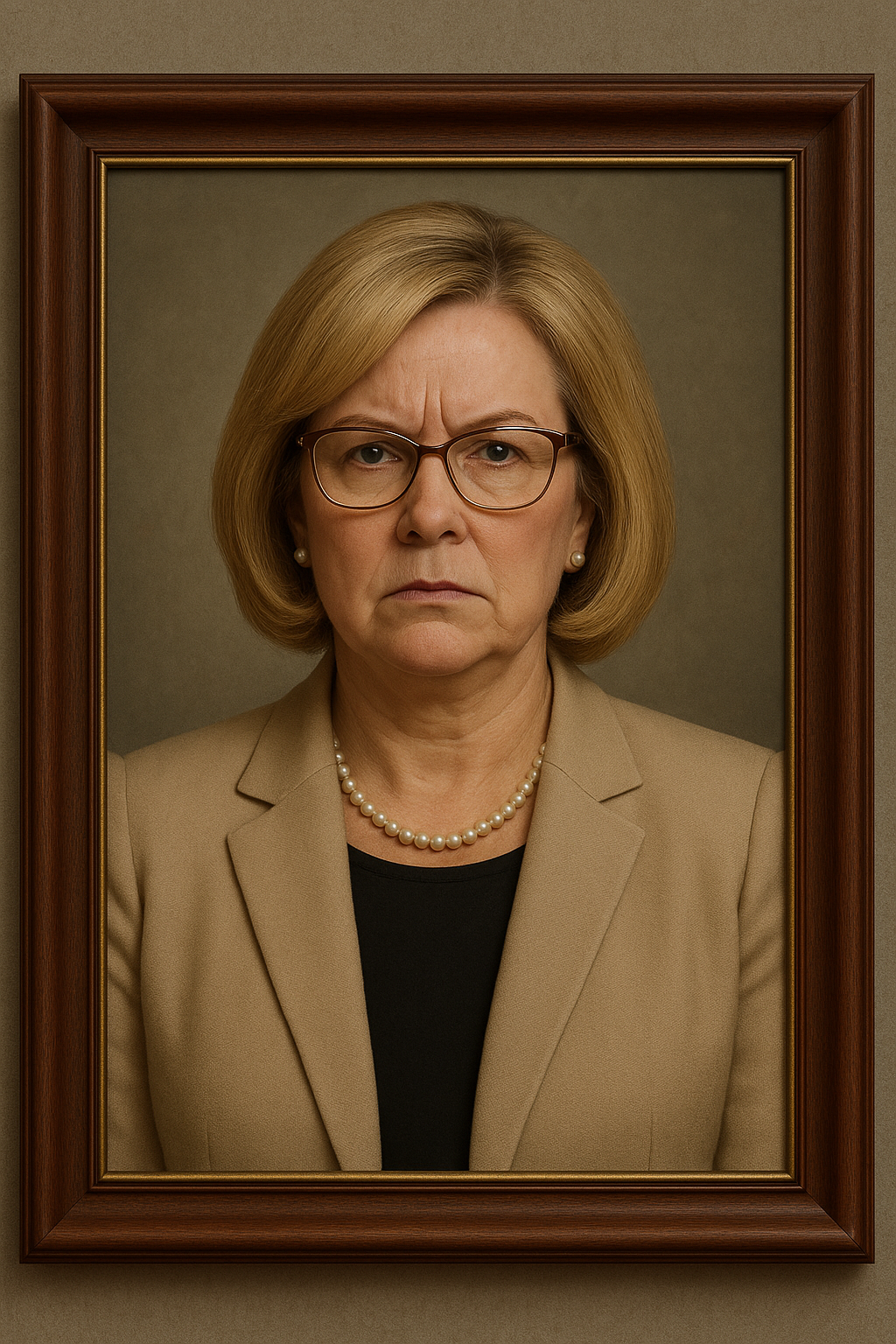
At the next council meeting, she took her seat at the long wooden table in the clubhouse. The walls were lined with framed photos of past members, all eerily similar—smiling, perfectly groomed women, all with the same sharp eyes and forced smiles. And in the middle of them, a blank frame, labeled “Current Council Member - Debbie Caldwell.”
She stared at the frame for a moment. It was already mounted.
Brenda handed her a copy of the revised handbook. “You’ll find the responsibilities listed on pages 1 through 63. Oh, and do try to keep your schedule open. We have weekly rituals... I mean, meetings.”
Debbie laughed awkwardly. “Right. Of course. Meetings.”
But something in Brenda’s eyes gleamed just a little too brightly.
Nothing had changed… yet.
But Debbie was starting to wonder if the only thing worse than living under the HOA’s thumb was becoming part of it.
Chapter 3: The Change
The first week passed with nothing more than exhaustion. Debbie chalked it up to stress—too many meetings, too many rules to memorize. The handbook had grown since she’d joined. New pages seemed to appear on their own. Every day brought a new regulation, a new violation report to sign, a new neighbor to scold for a wreath that was “two inches too wide.”
Her mirror began to lie to her.
At first, it was subtle. A single gray hair. A laugh line deepening around her mouth. She plucked the hair, smoothed the wrinkle with her fingertips, but both returned the next day—and multiplied.
She started wearing more beige.
Not consciously. One day, she noticed her closet had shifted. The colorful clothes she once wore—denim jackets, graphic tees, a sundress with sunflowers—were tucked in the back. In the front: pastel cardigans, khakis, low heels. She stared at them, confused, then shrugged and reached for a cream-colored blouse that hadn’t been there last week… but fit perfectly.
Her vocabulary shifted too. “I’m just concerned.” “It’s about community standards.” “Some of us care what this place looks like.” Words she would’ve mocked a month ago now rolled off her tongue with ease.
By week three, her voice was different.
Slightly higher. Sharper. A hint of a Midwestern twang that didn’t belong to her. She caught herself leaving messages on neighbors’ voicemails about garbage bins being left out “past the allowed time frame.” She didn’t remember recording them.
Her phone’s contacts updated themselves. “Mom” became “Margaret (nail salon).” Her old college friends stopped replying to her texts. When she called her best friend Rachel, she heard her own voice on the other end say, “This number is no longer in service.”
She felt her body shifting.
One morning she stared into the bathroom mirror and didn’t recognize her reflection.
Her once-bright eyes were a cold, frosted blue. Her skin had taken on that tanned-but-too-even look of someone who lives under tanning lamps. Her jaw was slightly tighter, her lips pursed in a default scowl. Her shoulders were broader, more rigid. Her posture perfect. Her hands wore rings she didn’t own, and her fingernails were painted in a neutral pink gloss.
Her voice had fully changed now—brassy, nasal, and assertive.
By week four, she couldn’t remember why she had joined the council. Or what her job used to be. Or why anyone would need more than one dog.
She stood at the head of the HOA table, gavel in hand, clipboard ready, and smiled across the table at the other women. They all smiled back, nearly identical.
“Meeting called to order,” Debbie said. “First item on the agenda: unauthorized lawn chairs at lot 23B.”
There was no resistance in her voice. No hesitation.
And if somewhere, deep inside, a younger version of her still screamed—buried under layers of beige fabric, community guidelines, and passive-aggressive perfection—no one could hear her anymore.
Not even Debbie.
She wasn’t Debbie Caldwell now.
She was Deborah, Chairwoman of the Rosepetal Estates HOA.
And she had standards to uphold.
Epilogue: Queen of the Cul-de-Sac
The woman who once rolled her eyes at HOA rules now ruled them.
Deborah Caldwell—no longer Debbie—stood on the perfectly trimmed lawn of her five-bedroom colonial, arms folded, lips pursed in judgmental satisfaction. Her French manicure was immaculate. Her blonde bob was helmet-stiff and aggressively angled. Her yoga pants were designer, though she hadn’t done yoga in years.
She was the undisputed queen of Rosepetal Estates.
The neighborhood feared her, respected her, and loathed her in equal measure. Her word was law. Her clipboard was a symbol of power. When she walked the cul-de-sac in her white SUV, slowing to glare at improperly parked vehicles or suspiciously long grass, garage doors mysteriously closed and children were ushered inside.
Her house was a monument to HOA perfection: flag flown exactly as the handbook required, shutters painted the only “approved” shade of taupe, not a leaf out of place. Her mailbox had a gold-embossed monogram. Her holiday decorations were tasteful, uniform, and mandated for the entire street.
Inside the home, it was no different.
She had married Richard—a dentist from the next community over who wore polo shirts even to bed and believed strongly in scheduling "family synergy time." Together, they had three daughters: Kaleigh, Madisyn, and Brynleigh. Each one a small, high-pitched tyrant in her own right.
At six, Kaleigh had already demanded a “noise complaint” against the ice cream truck for playing music after 7 p.m.
At eight, Madisyn once staged a lemonade stand “hostile takeover,” enforcing permits and inspecting the pH balance of competing drinks.
And Brynleigh—age ten—was president of her elementary school’s “Hall Monitor Leadership Board.” She carried a laminated rulebook in her backpack.
They were raised in Deborah’s image: polished, entitled, and deeply convinced that rules existed only for other people.
Deborah spent her days enforcing the HOA’s ever-expanding rulebook, attending brunches where she sipped sparkling water and judged other neighborhoods for their “lack of standards,” and organizing community meetings with an iron will wrapped in a floral-scented veneer of “concern.”
No one called her “Debbie” anymore.
That girl was gone—buried under years of regulation, transformation, and curated superiority. Sometimes, when she passed her bathroom mirror at night, she swore there was something flickering behind her eyes. A younger shadow. A ghost in lip gloss.
But it always faded.
She was Deborah Caldwell now.
And Rosepetal Estates had never been more orderly.